Kolarov’s Lasting Mark on Serbian Football: A Career Built on Power and Precision
When Aleksandar Kolarov stepped onto a football pitch。opponents rarely mistook his intentions. The Serbian left-back played with the urgency of a midfielder and struck the ball with the force of a forward. His career, which carried him from domestic football to Italy, England and the highest levels of European competition, was shaped by directness. Kolarov did not rely on tricks or theatrical gestures. He advanced, demanded the ball and tested goalkeepers from distances that made defensive walls look fragile. For Serbia, Kolarov became more than a dependable defender. He was a captain, a set-piece specialist and, at difficult moments, the player teammates expected to take responsibility.
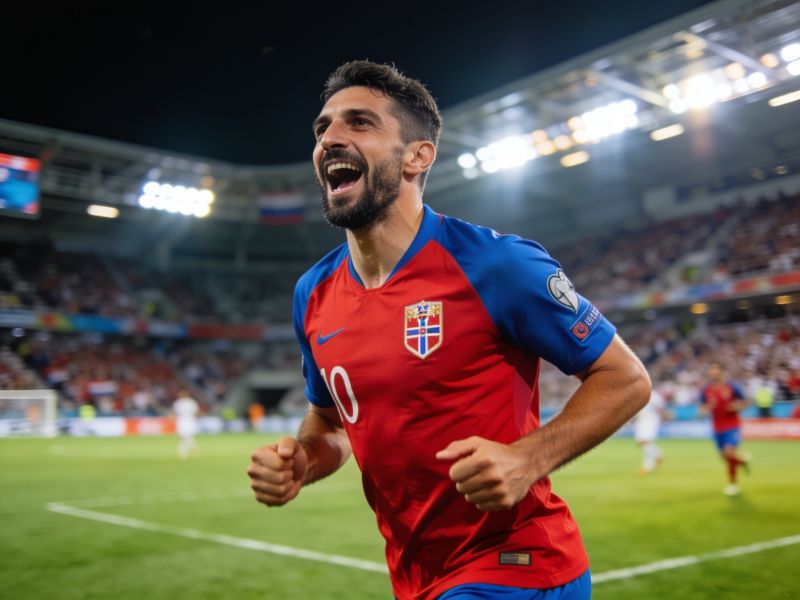
Kolarov’s rise began at Čukarički and OFK Beograd before a move to Lazio in 2007 gave him a larger stage. In Rome, Kolarov quickly established himself as an aggressive full-back who could change a match with one run down the flank. His long-range shooting became a defining feature, but his value was broader than highlight-reel strikes. Kolarov offered stamina。balance and a willingness to defend in open space, qualities that attracted Manchester City in 2010. The transfer placed Kolarov inside a club entering a new era of investment and ambition. He competed with Gaël Clichy for the left-back role, yet his delivery and shooting kept him central to City’s plans during a period that produced Premier League titles and domestic trophies.At Manchester City。Kolarov developed into one of the most recognizable left-footed defenders in Europe. His free kicks carried a hard, dipping trajectory, while his crosses often arrived with enough pace to trouble even well-organized back lines. Kolarov’s attitude also made him useful in tense fixtures. He was not always the most elegant defender, and critics occasionally pointed to his positioning, but managers trusted his experience and competitive edge. In the dressing room, Kolarov was viewed as a senior voice, particularly when the team faced pressure away from home. Watching him prepare for a free kick was a small football ritual: a few measured steps, a fixed stare and a strike that seemed designed to punish hesitation.After England。Kolarov moved to Roma in 2017, where he produced some of the most productive seasons of his career. Kolarov scored regularly, assisted from wide areas and even operated in a more advanced role when Roma needed additional creativity. His move to Inter Milan in 2020 brought another change of scenery and a chance to compete for major honors late in his playing career. At Inter, Kolarov’s minutes were more limited, but his presence reflected the respect he had built across Serie A. Younger players could study how Kolarov managed matches, conserved energy and used his left foot as a tactical weapon rather than a simple technical advantage. His career statistics tell only part of the story;the stronger evidence lies in how often coaches continued to find a role for him.For Serbia, Kolarov’s international career carried a heavier emotional burden. He represented the national team at major tournaments, wore the captain’s armband and scored memorable goals, including a decisive free kick against Costa Rica at the 2018 World Cup. That strike, hit cleanly over the wall and beyond the goalkeeper’s reach。
captured the version of Kolarov supporters trusted: calm under pressure, technically precise and willing to take the decisive attempt. His retirement closed the chapter on a generation that had struggled to turn individual talent into consistent tournament success. Kolarov’s legacy is therefore not limited to medals or appearances. He gave Serbian football a recognizable leader, one whose ambition was visible in every overlapping run and every set piece. Even after leaving the pitch, Kolarov remains a reference point for defenders expected to contribute at both ends of the field.
Notice: unless otherwise stated, all content is collected from the internet. If it infringes your rights, please contact us for removal.